
Advances in Balance Diagnosis and Treatment: Part 2
Presented by Andrea E. Ecsedy
Clinicians often struggle to bridge the gap between complex productivity standards and the seamless integration of evidence-based practice into balance rehabilitation. This course provides a workable, efficient methodology for evaluating and treating individuals with balance dysfunction, using motor skill acquisition (MSA) principles as the primary framework. Participants will explore the critical role of feedback, specifically external focus, and learn why addressing alignment and vestibular “miscalibrations” like BPPV is a prerequisite for effective training. By applying these concepts to diverse clinical cases—ranging from peripheral neuropathy to Parkinson’s disease—providers will gain the reasoning skills necessary to move beyond generic interventions toward prescriptive, impairment-driven treatment plans.
Learning Outcomes
- Integrate motor skill–acquisition concepts into balance prescriptions for individuals with balance dysfunction
- Coordinate clinical reasoning strategies to select appropriate interventions tailored to specific patient impairments
- Formulate an evidence-based treatment plan based on a clinically relevant balance diagnosis to improve functional daily activities
- Assess case scenarios for patients with balance dysfunction to determine appropriate clinical interventions
Meet your instructor

Andrea E. Ecsedy
Andrea Ecsedy is a board-certified specialist in neurologic physical therapy with over 40 years of clinical experience. Her clinical focus includes balance and vestibular dysfunction, stroke, Parkinson’s disease, and other neurologic diseases. She has taught as adjunct faculty in several university physical therapy programs…
Chapters & learning objectives
1. Motor Skill–Acquisition Concepts
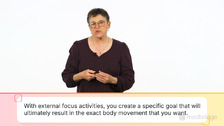
This chapter frames balance as a motor skill and details how principles of experience-dependent plasticity should dictate intervention design. It emphasizes the importance of feedback types, specifically comparing internal versus external focus, to optimize the “big hitters” of rehabilitation: salience, intensity, and specificity.

2. Domain-Specific Treatment Suggestions
Moving beyond “standing on foam,” this section provides concrete treatment ideas for specific balance domains, including dual-tasking, reactive postural control, and sensory reweighting. Clinicians will learn to utilize autonomous support and enhanced expectancies to improve patient confidence and outcomes.
3. Case Scenarios and Knowledge Application
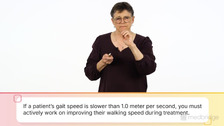
This chapter uses a systematic checklist to analyze four distinct patient cases, ensuring that assessments are comprehensive and treatments are prescriptive. By auditing real-world scenarios, participants practice identifying missing assessment data and formulating targeted plans for complex patients.

4. Additional Demonstration Examples
In this chapter, we’ll include additional demonstration examples for balance assessment.

Frequently asked questions
Everything you need to know about Medbridge courses.
Who creates Medbridge courses?
We work with industry-leaders, top researchers, and consultants to build content roadmaps that are then structured into courses, filmed, and edited by our production team before being launched to our site.
How often does Medbridge release new courses?
New courses are added monthly and are automatically included in your subscription as they launch.
How often does Medbridge update courses?
Medbridge reviews its courses annually for relevance and to assess if content is up to date. Based on these reviews it may be determined that a course is out of date resulting in the course being re-filmed or retired, if the content is no longer needed (e.g. a replacement course already exists, the concepts are no longer best practice, etc.).
How many courses does Medbridge offer?
We have over 3,000 accredited courses and we are continually updating our library with new courses. Check our course library for the most up-to-date count for your discipline.
Are there any additional fees for taking a Medbridge course?
There are no additional fees for taking a Medbridge course, obtaining a course certificate of completion, earning CEUs as a subscriber, or accessing any of the additional tools your subscription may include.
Is there a limit to the number of courses I can take?
There is no limit to the number of courses you can take as a subscriber! As a subscriber to Medbridge, you have unlimited access to over 3,000+ accredited CE courses.
If you are a Premium subscriber, you also have unlimited access to our Patient Engagement Tools such as the Home Exercise Program, Patient Education Library, Orthopedic Exam Tests, and Manual Therapy Techniques. We have over 7,000 exercises and over 650+ videos and handouts of patient education resources with more exercises and patient education added to the library based on subscriber feedback, volume of request and specialities.
What is your refund policy?
You are eligible for a refund provided your request is received within 30 days of your subscription purchase and your account has no activity.