
Assistive Technology for Home and Community
Presented by Donna Case
This course explores the intersection of assistive technology, universal design, and accessible design in enhancing independence and participation for individuals with disabilities in home and community settings. Participants will learn how thoughtful design—both structural and technological—can support safety, comfort, and functional performance. The course examines the distinctions and overlap between universal and accessible design, and highlights the evolving role of smart home technology as a tool to improve daily living. Additionally, learners will identify practical no-tech, low-tech, and high-tech solutions that can be implemented to support engagement in meaningful activities. This course is designed for occupational therapists, rehabilitation professionals, educators, and home modification specialists working across residential and community environments.
Learning Outcomes
- Identify how universal design for living and accessible home design intersect
- Identify how universal design for living and accessible home design differ
- Highlight how smart home technology can support independence and participation in meaningful activities such as self-care or communication
- Identify no-tech, low-tech, and high-tech solutions that promote independence and engagement in meaningful home and community activities for individuals with disabilities
Meet your instructor

Donna Case
Donna Case, PhD, OTL, began her work with assistive technology more than 40 years ago when working with adults with significant multiple disabilities who had been removed from Michigan’s state institutions. She received a master’s degree in interdisciplinary technology from Eastern Michigan University to facilitate her…
Chapters & learning objectives
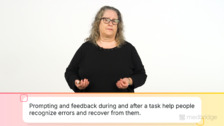
1. Universal Design for Home and Community
This chapter introduces the philosophy and principles of universal design, emphasizing the importance of creating environments that accommodate the widest possible range of users, regardless of ability. Learners will explore how universal design supports human functioning by being perceptible, flexible, intuitive, and inclusive in everyday use. Examples in home and community settings highlight how thoughtful design can increase safety, independence, and participation for all.

2. Accessible Design for Home and Community
This chapter differentiates accessible design from universal design by focusing on environments specifically adapted for individuals with disabilities. The discussion includes strategies for barrier removal, adaptable design, and visitability, as well as considerations such as resale value and long-term planning. Learners will understand how accessible design can be personalized to meet current and future needs while supporting inclusive community living.
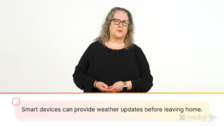
3. Smart Home Technology and No-, Low-, and High-Technology Solutions
This chapter highlights how smart home technologies and a range of assistive tools—from no-tech to high-tech—can support independent living. Learners will examine how technologies like voice-activated devices, smart appliances, and electronic aids to daily living enhance safety, communication, and daily task completion. The chapter also underscores the importance of tailoring technology solutions to individual needs to maximize functional independence.
More courses in this series
Overview of Assistive Technology
Donna Case
Assistive Technology for Home and Community
Donna Case
Assistive Technology Access, Laws, and Funding
Donna Case

Assistive Technology for Play and Recreation
Donna Case
Information Assistive Technology
Donna Case

Assistive Technology for Activities of Daily Living
Donna Case
Frequently asked questions
Everything you need to know about Medbridge courses.
Who creates Medbridge courses?
We work with industry-leaders, top researchers, and consultants to build content roadmaps that are then structured into courses, filmed, and edited by our production team before being launched to our site.
How often does Medbridge release new courses?
New courses are added monthly and are automatically included in your subscription as they launch.
How often does Medbridge update courses?
Medbridge reviews its courses annually for relevance and to assess if content is up to date. Based on these reviews it may be determined that a course is out of date resulting in the course being re-filmed or retired, if the content is no longer needed (e.g. a replacement course already exists, the concepts are no longer best practice, etc.).
How many courses does Medbridge offer?
We have over 3,000 accredited courses and we are continually updating our library with new courses. Check our course library for the most up-to-date count for your discipline.
Are there any additional fees for taking a Medbridge course?
There are no additional fees for taking a Medbridge course, obtaining a course certificate of completion, earning CEUs as a subscriber, or accessing any of the additional tools your subscription may include.
Is there a limit to the number of courses I can take?
There is no limit to the number of courses you can take as a subscriber! As a subscriber to Medbridge, you have unlimited access to over 3,000+ accredited CE courses.
If you are a Premium subscriber, you also have unlimited access to our Patient Engagement Tools such as the Home Exercise Program, Patient Education Library, Orthopedic Exam Tests, and Manual Therapy Techniques. We have over 7,000 exercises and over 650+ videos and handouts of patient education resources with more exercises and patient education added to the library based on subscriber feedback, volume of request and specialities.
What is your refund policy?
You are eligible for a refund provided your request is received within 30 days of your subscription purchase and your account has no activity.