
Building Resilient Youth: Coping Strategies for Rehab Professionals
Presented by Melissa Sevestre
Youth frequently encounter challenging situations that require effective coping strategies, yet many struggle with maladaptive behaviors that disrupt their daily lives and rehabilitation progress. This course provides rehabilitation professionals with the essential tools to identify signs of emotional distress, such as withdrawal, irritability, and somatic complaints, which can interfere with therapy outcomes. Participants will explore a range of developmentally appropriate interventions, including sensory tools, breathing techniques, and grounding exercises designed to foster resilience and improve emotional regulation. By emphasizing a supportive, stigma-free environment and strengths-based communication, the program demonstrates how to individualize coping skills for diverse pediatric populations. This course is specifically designed for occupational therapists, physical therapists, and other rehab specialists working in outpatient, school-based, or acute care settings who seek to empower their young clients to effectively "bounce back" from difficulties. Through case studies and practical demonstrations, clinicians will learn to collaborate with youth and caregivers to integrate these strategies into the therapeutic process.
Learning Outcomes
- List signs of stress, emotional distress, and maladaptive coping in youth during rehabilitation sessions
- Define developmental and age-appropriate coping mechanisms, including emotional regulation, problem-solving, and resilience-building
- Select age-appropriate coping strategies for youth to utilize during challenging daily life occupations, such as school tasks (education) or peer interactions (social participation)
- Identify the importance of providing a supportive, stigma-free environment when discussing mental health and coping skills with youth and caregivers
Meet your instructor

Melissa Sevestre
Dr. Melissa Sevestre has been an occupational therapist for more than 18 years. She earned her bachelor’s degree in special education with a focus on intellectual disabilities from the University of Central Florida. She spent three years teaching individuals with intellectual and developmental disabilities (IDD) and autism…
Chapters & learning objectives
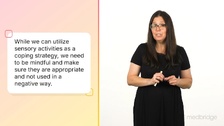
1. When Coping Goes Wrong: Recognizing Unhealthy Strategies in Youth
This chapter focuses on identifying the various signs of stress and emotional distress that may manifest as maladaptive coping during therapy sessions, such as aggression, avoidance, or sensory-seeking behaviors. Understanding these signals is critical for rehabilitation professionals because unhealthy strategies can significantly decrease a child's concentration and motivation, ultimately hindering their ability to complete daily tasks and reach clinical goals.
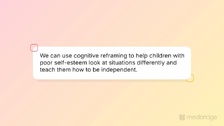
2. Developing Age-Appropriate Coping Skills in Youth
Clinicians will explore the developmental progression of coping mechanisms, ranging from simple sensory supports for preschoolers to complex cognitive reframing and peer support for adolescents. It is vital to master these distinctions to ensure that interventions align with the child’s maturity level while building the foundational resilience needed for them to adapt to life’s high demands.
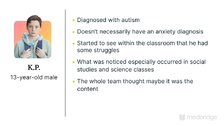
3. Practical Strategies for Teaching Coping to Youth with Mental Health Challenges
This chapter provides a deep dive into specific, individualized tools such as breathing techniques, grounding exercises, and visual supports like calming books to help youth stay connected to the present moment. By using case studies and equipment demonstrations, professionals will learn to work directly with young clients to implement these expressive and sensory strategies in the rehabilitative setting.
More courses in this series
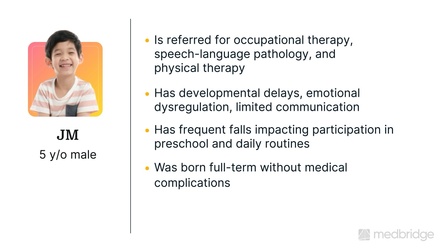
The Impact of ACEs and SDOH on Youth Mental Health
Melissa Sevestre
Shaping Futures: How Mental Health Influences Youth Development
Melissa Sevestre
Partnering for Wellness: Rehab’s Role in School Mental Health
Melissa Sevestre
Building Resilient Youth: Coping Strategies for Rehab Professionals
Melissa Sevestre
Helping Youth Strive: Mindfulness Practice for Rehab Professionals
Melissa Sevestre
Frequently asked questions
Everything you need to know about Medbridge courses.
Who creates Medbridge courses?
We work with industry-leaders, top researchers, and consultants to build content roadmaps that are then structured into courses, filmed, and edited by our production team before being launched to our site.
How often does Medbridge release new courses?
New courses are added monthly and are automatically included in your subscription as they launch.
How often does Medbridge update courses?
Medbridge reviews its courses annually for relevance and to assess if content is up to date. Based on these reviews it may be determined that a course is out of date resulting in the course being re-filmed or retired, if the content is no longer needed (e.g. a replacement course already exists, the concepts are no longer best practice, etc.).
How many courses does Medbridge offer?
We have over 3,000 accredited courses and we are continually updating our library with new courses. Check our course library for the most up-to-date count for your discipline.
Are there any additional fees for taking a Medbridge course?
There are no additional fees for taking a Medbridge course, obtaining a course certificate of completion, earning CEUs as a subscriber, or accessing any of the additional tools your subscription may include.
Is there a limit to the number of courses I can take?
There is no limit to the number of courses you can take as a subscriber! As a subscriber to Medbridge, you have unlimited access to over 3,000+ accredited CE courses.
If you are a Premium subscriber, you also have unlimited access to our Patient Engagement Tools such as the Home Exercise Program, Patient Education Library, Orthopedic Exam Tests, and Manual Therapy Techniques. We have over 7,000 exercises and over 650+ videos and handouts of patient education resources with more exercises and patient education added to the library based on subscriber feedback, volume of request and specialities.
What is your refund policy?
You are eligible for a refund provided your request is received within 30 days of your subscription purchase and your account has no activity.