
Shaping Futures: How Mental Health Influences Youth Development
Presented by Melissa Sevestre
This course explores the critical intersection between pediatric mental health and developmental outcomes, highlighting how psychological well-being serves as the foundation for growth across physical, cognitive, and social domains. Many children facing developmental delays also struggle with underlying mental health challenges or trauma that can significantly disrupt their progress in traditional rehabilitation. Practitioners will learn to move beyond symptom-based treatment by integrating the biopsychosocial model into their clinical reasoning to address the complex interaction of biological, psychological, and social factors. By analyzing age-specific mental health deficits from preschool through adolescence, participants will gain the tools to implement trauma-informed, multidisciplinary strategies that support holistic patient care. This course is designed for occupational therapists, physical therapists, and speech-language pathologists working in outpatient pediatric clinics, early intervention, or school-based settings. Through comprehensive case analysis, clinicians will develop the skills to foster resilience and functional independence in their young patients.
Learning Outcomes
- Examine the relationship between mental health and developmental domains—physical, cognitive, socioemotional, communicative, and adaptive functioning
- Integrate the biopsychosocial model of child development into clinical practice to address the interaction between mental health, disability, and rehabilitation needs
- Analyze the impact of environmental factors, such as family dynamics, school environment, peer relationships, and social determinants of health, on youth mental well-being and developmental outcomes
- Integrate mental health-sensitive approaches into multidisciplinary rehabilitation interventions to support holistic patient care
Meet your instructor

Melissa Sevestre
Dr. Melissa Sevestre has been an occupational therapist for more than 18 years. She earned her bachelor’s degree in special education with a focus on intellectual disabilities from the University of Central Florida. She spent three years teaching individuals with intellectual and developmental disabilities (IDD) and autism…
Chapters & learning objectives

1. Holistic Child Development: Understanding Mental Health Influences
This chapter examines how mental health serves as a primary foundation for physical, cognitive, socioemotional, communicative, and adaptive growth throughout childhood. It is essential for clinicians to recognize how disruptions like anxiety or trauma can manifest as developmental delays across different age groups to ensure accurate assessment and intervention planning.
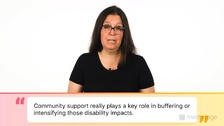
2. Integrating the Biopsychosocial Model in Pediatric Disability and Mental Health
Participants will explore the biopsychosocial model to understand how biological vulnerabilities, psychological coping, and social environments intersect to shape a child’s experience with disability. Understanding these overlapping influences allows multidisciplinary teams to move toward a more holistic approach that tailors rehabilitation to the specific social and emotional needs of the patient.
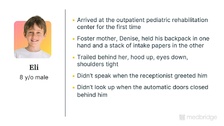
3. Seeing the Whole Story: Development, Mental Health, and the Biopsychosocial Model in Action
Through a detailed case study of a child with a history of trauma, this chapter demonstrates the practical application of trauma-informed care and interdisciplinary collaboration in a clinical setting. It highlights how integrated PT, OT, and SLP interventions can be adapted to build safety, regulation, and confidence, ultimately helping the child reach critical developmental milestones.
More courses in this series
The Impact of ACEs and SDOH on Youth Mental Health
Melissa Sevestre

Shaping Futures: How Mental Health Influences Youth Development
Melissa Sevestre

Partnering for Wellness: Rehab’s Role in School Mental Health
Melissa Sevestre
Building Resilient Youth: Coping Strategies for Rehab Professionals
Melissa Sevestre

Helping Youth Strive: Mindfulness Practice for Rehab Professionals
Melissa Sevestre
Frequently asked questions
Everything you need to know about Medbridge courses.
Who creates Medbridge courses?
We work with industry-leaders, top researchers, and consultants to build content roadmaps that are then structured into courses, filmed, and edited by our production team before being launched to our site.
How often does Medbridge release new courses?
New courses are added monthly and are automatically included in your subscription as they launch.
How often does Medbridge update courses?
Medbridge reviews its courses annually for relevance and to assess if content is up to date. Based on these reviews it may be determined that a course is out of date resulting in the course being re-filmed or retired, if the content is no longer needed (e.g. a replacement course already exists, the concepts are no longer best practice, etc.).
How many courses does Medbridge offer?
We have over 3,000 accredited courses and we are continually updating our library with new courses. Check our course library for the most up-to-date count for your discipline.
Are there any additional fees for taking a Medbridge course?
There are no additional fees for taking a Medbridge course, obtaining a course certificate of completion, earning CEUs as a subscriber, or accessing any of the additional tools your subscription may include.
Is there a limit to the number of courses I can take?
There is no limit to the number of courses you can take as a subscriber! As a subscriber to Medbridge, you have unlimited access to over 3,000+ accredited CE courses.
If you are a Premium subscriber, you also have unlimited access to our Patient Engagement Tools such as the Home Exercise Program, Patient Education Library, Orthopedic Exam Tests, and Manual Therapy Techniques. We have over 7,000 exercises and over 650+ videos and handouts of patient education resources with more exercises and patient education added to the library based on subscriber feedback, volume of request and specialities.
What is your refund policy?
You are eligible for a refund provided your request is received within 30 days of your subscription purchase and your account has no activity.