
Orthopedic Mentorship Series: Knee
Presented by Jared Vagy
Knee pain often presents a diagnostic challenge for clinicians due to the complex interplay between arthrokinematics, muscle performance, and functional movement patterns like walking and running. This course utilizes a case-based mentorship approach to guide healthcare providers through the clinical reasoning process for patients presenting with anteromedial and anterolateral knee symptoms. Participants will explore how to synthesize subjective history with objective data, such as gait analysis and dynamometry, to identify specific mobility and strength deficits. By applying evidence-based interventions—including joint mobilizations, soft-tissue techniques, and gait retraining—clinicians will learn to develop targeted treatment plans that address the root causes of mechanical knee pain. The course emphasizes the transition from traditional manual muscle testing to more sensitive objective measures to ensure patients meet the functional demands of their daily lives and athletic pursuits.
Learning Outcomes
- Identify strategies for gathering a detailed patient history during a subjective examination to support clinical reasoning
- Recognize effective objective exam techniques, including tests and measures used to identify physical impairments
- Outline treatment strategies and interventions designed to increase patient participation in daily activities
- Infer how to synthesize subjective, objective, and intervention data to support clinical decision-making
- Match evidence-based research findings to specific patient cases
Meet your instructor

Jared Vagy
Jared Vagy received his doctorate in physical therapy (DPT) from the University of Southern California (USC) and completed a one-year residency in orthopedics and a one-year fellowship in movement science. Dr. Vagy is a clinical associate professor of physical therapy in the DPT program at USC and is a mentor in both the…
Chapters & learning objectives
1. Introduction
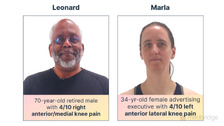
This chapter lays the groundwork for the case presentation process, introducing you to the framework and preparing you for the upcoming patient cases.
2. Case #1: Leonard
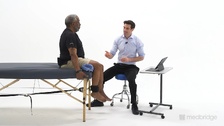
Participants will examine the case of an older adult experiencing knee pain during gait loading, focusing on the relationship between sagittal plane mobility and shock absorption. The lesson demonstrates how to use dynamometry to overcome the ceiling effects of manual muscle testing in a clinical setting.
3. Case #2: Marla
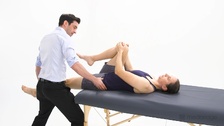
This chapter explores patellofemoral pain in a recreational runner, highlighting frontal- and transverse-plane impairments during the running cycle. Clinicians will learn symptom modification procedures and targeted interventions for the hip and ankle to optimize running mechanics.
More courses in this series

Orthopedic Mentorship Series: Shoulder
Jared Vagy

Orthopedic Mentorship Series: Low Back
Jared Vagy
Orthopedic Mentorship Series: Hip
Jared Vagy
Orthopedic Mentorship Series: Neck
Jared Vagy
Orthopedic Mentorship Series: Clinical Practice Guidelines
Jared Vagy
Orthopedic Mentorship Series: Framework for Mentorship
Jared Vagy
Orthopedic Mentorship Series: Knee
Jared Vagy
Orthopedic Mentorship Series: Foot and Ankle
Jared Vagy
Orthopedic Mentorship Series: Elbow
Jared Vagy
Orthopedic Mentorship Series: Wrist and Fingers
Jared Vagy
Frequently asked questions
Everything you need to know about Medbridge courses.
Who creates Medbridge courses?
We work with industry-leaders, top researchers, and consultants to build content roadmaps that are then structured into courses, filmed, and edited by our production team before being launched to our site.
How often does Medbridge release new courses?
New courses are added monthly and are automatically included in your subscription as they launch.
How often does Medbridge update courses?
Medbridge reviews its courses annually for relevance and to assess if content is up to date. Based on these reviews it may be determined that a course is out of date resulting in the course being re-filmed or retired, if the content is no longer needed (e.g. a replacement course already exists, the concepts are no longer best practice, etc.).
How many courses does Medbridge offer?
We have over 3,000 accredited courses and we are continually updating our library with new courses. Check our course library for the most up-to-date count for your discipline.
Are there any additional fees for taking a Medbridge course?
There are no additional fees for taking a Medbridge course, obtaining a course certificate of completion, earning CEUs as a subscriber, or accessing any of the additional tools your subscription may include.
Is there a limit to the number of courses I can take?
There is no limit to the number of courses you can take as a subscriber! As a subscriber to Medbridge, you have unlimited access to over 3,000+ accredited CE courses.
If you are a Premium subscriber, you also have unlimited access to our Patient Engagement Tools such as the Home Exercise Program, Patient Education Library, Orthopedic Exam Tests, and Manual Therapy Techniques. We have over 7,000 exercises and over 650+ videos and handouts of patient education resources with more exercises and patient education added to the library based on subscriber feedback, volume of request and specialities.
What is your refund policy?
You are eligible for a refund provided your request is received within 30 days of your subscription purchase and your account has no activity.