
Bladder and Bowel Function: What’s Normal?
Presented by Heather Rader
Healthcare providers often struggle to effectively educate patients on the interconnected nature of pelvic health, leading to fragmented care and clinical inefficiency. This course provides a comprehensive framework for understanding the structural and functional parallels between the urinary and gastrointestinal systems to bridge this gap. By examining the pelvic floor as a unified region rather than a collection of isolated systems, clinicians can better recognize how common pathologies such as pelvic organ prolapse, prostate issues, and muscle overactivity contribute to complex waste removal dysfunctions. Participants will learn to identify the specific symptoms of overactive bladder, various forms of incontinence, and constipation while gaining practical communication tools to improve patient history-taking and engagement. This course is designed for physical therapists and other healthcare professionals working in pelvic health or geriatric settings who seek to streamline their diagnostic process and enhance patient outcomes through a more integrated clinical perspective.
Learning Outcomes
- Compare the similarities and differences between the structures of urination and defecation
- List the pelvic floor–related functions of the bladder and bowels
- Recognize structural dysfunctions in the pelvic floor region, including pelvic organ prolapse, prostate issues, and pelvic pain–related muscle overactivity
- Identify the symptoms of overactive bladder, urinary and fecal incontinence, and constipation
Meet your instructor

Heather Rader
Dr. Heather Rader is the owner of Rader Pelvic Physical Therapy, a practice devoted to the treatment of pregnancy-related pain and dysfunction, incontinence, pelvic organ prolapse, and complex pelvic pain in all genders. A physical therapist since 1994, she graduated from the University of Miami with a master’s degree in…
Chapters & learning objectives
1. Structural Norms of the Bladder and Bowels
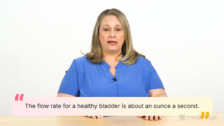
This chapter utilizes a comparative anatomy approach to highlight the striking similarities between the structures of urination and defecation, such as by comparing the bladder to the rectum as stretchy, smooth-muscle reservoirs. Understanding these anatomical parallels is essential for clinicians because it allows for a more intuitive explanation of waste removal systems, ultimately saving time during patient education in the clinic.

2. Functional Norms of the Bladder and Bowels
This section establishes clear physiological benchmarks for storing, controlling, and emptying waste, including normal voiding frequencies and healthy stool consistencies. Establishing these norms is critical for healthcare providers to accurately differentiate between healthy bodily sensations and the abnormal symptoms that require clinical intervention.

3. Structural Dysfunctions in the Pelvic Floor Region
In this chapter, the focus shifts to how regional structural changes, such as pelvic organ prolapse or prostate enlargement, physically impede the mechanics of bladder and bowel emptying. This knowledge is vital for identifying when a patient’s symptoms are caused by physical obstructions or muscle overactivity rather than systemic disease.

4. Dysfunctions of the Bladder and Bowels
The final chapter explores specific clinical conditions, including overactive bladder, urinary and fecal incontinence, and various forms of constipation. Providing a structured “script” and interview framework for these dysfunctions ensures that providers can conduct thorough history-taking to accurately diagnose and document complex pelvic health issues.
More courses in this series

Bladder and Bowel Function: What’s Normal?
Heather Rader
Overactive Bladder and Incontinence: Patient Education Strategies
Heather Rader

Constipation and Fecal Incontinence: Patient Education Strategies
Heather Rader

Kegel Exercises and the Underactive Pelvic Floor
Heather Rader
Pelvic Pain and the Overactive Pelvic Floor
Heather Rader
Frequently asked questions
Everything you need to know about Medbridge courses.
Who creates Medbridge courses?
We work with industry-leaders, top researchers, and consultants to build content roadmaps that are then structured into courses, filmed, and edited by our production team before being launched to our site.
How often does Medbridge release new courses?
New courses are added monthly and are automatically included in your subscription as they launch.
How often does Medbridge update courses?
Medbridge reviews its courses annually for relevance and to assess if content is up to date. Based on these reviews it may be determined that a course is out of date resulting in the course being re-filmed or retired, if the content is no longer needed (e.g. a replacement course already exists, the concepts are no longer best practice, etc.).
How many courses does Medbridge offer?
We have over 3,000 accredited courses and we are continually updating our library with new courses. Check our course library for the most up-to-date count for your discipline.
Are there any additional fees for taking a Medbridge course?
There are no additional fees for taking a Medbridge course, obtaining a course certificate of completion, earning CEUs as a subscriber, or accessing any of the additional tools your subscription may include.
Is there a limit to the number of courses I can take?
There is no limit to the number of courses you can take as a subscriber! As a subscriber to Medbridge, you have unlimited access to over 3,000+ accredited CE courses.
If you are a Premium subscriber, you also have unlimited access to our Patient Engagement Tools such as the Home Exercise Program, Patient Education Library, Orthopedic Exam Tests, and Manual Therapy Techniques. We have over 7,000 exercises and over 650+ videos and handouts of patient education resources with more exercises and patient education added to the library based on subscriber feedback, volume of request and specialities.
What is your refund policy?
You are eligible for a refund provided your request is received within 30 days of your subscription purchase and your account has no activity.