
Kegel Exercises and the Underactive Pelvic Floor
Presented by Heather Rader
This course addresses the clinical challenges of identifying and treating pelvic floor muscle underactivity, a condition frequently linked to urinary and bowel dysfunction. While many healthcare providers recognize the term “Kegel,” there remains a significant gap in the ability to properly instruct patients on correct contraction techniques and functional exercise progressions. To bridge this gap, the curriculum focuses on the historical use of pelvic floor exercises from antiquity to modern-day rehabilitation science, the primary functions of the pelvic floor muscles, and the specific clinical indications for strengthening interventions. Participants will learn to guide patients through various levels of pelvic floor muscle training, from isolated power and endurance contractions to integrated lumbopelvic–hip movements. This training is specifically designed for a multidisciplinary audience—including physical therapists, occupational therapists, and nurses—practicing in settings such as outpatient clinics, hospitals, and home health.
Learning Outcomes
- Recall the history of Kegel exercises and their evolution into present-day rehabilitation standards
- Identify proprioceptive and kinesthetic visual, verbal, and tactile cues to assist pelvic floor muscle awareness instruction
- Differentiate exercise approaches for an underactive pelvic floor, including facilitation, isolation, and functional integration, to improve muscle activation during toileting
Meet your instructor

Heather Rader
Dr. Heather Rader is the owner of Rader Pelvic Physical Therapy, a practice devoted to the treatment of pregnancy-related pain and dysfunction, incontinence, pelvic organ prolapse, and complex pelvic pain in all genders. A physical therapist since 1994, she graduated from the University of Miami with a master’s degree in…
Chapters & learning objectives

1. The History of Kegel Exercises
Pelvic floor muscle exercises have roots in early medical practices for continence and have become a central component of modern rehabilitation. This progression was formalized by the mid-20th-century work of Dr. Arnold Kegel, whose research established pelvic floor muscle training as an effective nonsurgical treatment for incontinence and clarified key functional roles of the pelvic floor. Today, his contributions underpin evidence-based pelvic health rehabilitation across bladder, bowel, and pelvic dysfunctions. Understanding these foundational roles is essential for clinicians to recognize how muscle underactivity contributes to common clinical symptoms.

2. Finding the Pelvic Floor: Anatomy and Awareness Cues
Learners will examine the basic anatomy of the pelvic floor muscles to establish a foundation for teaching proprioceptive (location-sense) cues used in neuromuscular reeducation interventions. Kinesthetic cues to enhance movement awareness will also be introduced. Appropriate training and precise verbal cues to elicit an effective “lift and squeeze” contraction are essential for identifying signs of muscle underactivity and ensuring proper technique. These elements represent critical first steps toward developing an effective rehabilitation plan.
3. Exercise Approaches for the Underactive Pelvic Floor
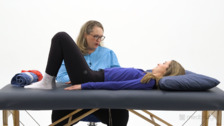
This chapter outlines the implementation of three progressive exercise strategies to address underactive pelvic floor muscles, emphasizing both power and endurance training to improve muscle performance. These strategies progress from facilitation-assisted activation to isolated strengthening and finally to functional integration, ensuring that pelvic floor contractions are effectively incorporated into lumbopelvic–hip movements used in daily activities through overflow principles, progressive resistance, cocontractions, core stabilization, and functional precontractions (the Knack).
More courses in this series
Bladder and Bowel Function: What’s Normal?
Heather Rader
Overactive Bladder and Incontinence: Patient Education Strategies
Heather Rader

Constipation and Fecal Incontinence: Patient Education Strategies
Heather Rader

Kegel Exercises and the Underactive Pelvic Floor
Heather Rader
Pelvic Pain and the Overactive Pelvic Floor
Heather Rader
Frequently asked questions
Everything you need to know about Medbridge courses.
Who creates Medbridge courses?
We work with industry-leaders, top researchers, and consultants to build content roadmaps that are then structured into courses, filmed, and edited by our production team before being launched to our site.
How often does Medbridge release new courses?
New courses are added monthly and are automatically included in your subscription as they launch.
How often does Medbridge update courses?
Medbridge reviews its courses annually for relevance and to assess if content is up to date. Based on these reviews it may be determined that a course is out of date resulting in the course being re-filmed or retired, if the content is no longer needed (e.g. a replacement course already exists, the concepts are no longer best practice, etc.).
How many courses does Medbridge offer?
We have over 3,000 accredited courses and we are continually updating our library with new courses. Check our course library for the most up-to-date count for your discipline.
Are there any additional fees for taking a Medbridge course?
There are no additional fees for taking a Medbridge course, obtaining a course certificate of completion, earning CEUs as a subscriber, or accessing any of the additional tools your subscription may include.
Is there a limit to the number of courses I can take?
There is no limit to the number of courses you can take as a subscriber! As a subscriber to Medbridge, you have unlimited access to over 3,000+ accredited CE courses.
If you are a Premium subscriber, you also have unlimited access to our Patient Engagement Tools such as the Home Exercise Program, Patient Education Library, Orthopedic Exam Tests, and Manual Therapy Techniques. We have over 7,000 exercises and over 650+ videos and handouts of patient education resources with more exercises and patient education added to the library based on subscriber feedback, volume of request and specialities.
What is your refund policy?
You are eligible for a refund provided your request is received within 30 days of your subscription purchase and your account has no activity.