
Simplifying Performance Rehab Part 3: Speed, Agility, and Metabolic Training
Presented by Phil Plisky and Nate Denning
This course is part of a series designed to be taken sequentially. It is recommended that learners view the series in the following course order:
- Simplifying Performance Rehab Part 1: A Case-Based Series
- Simplifying Performance Rehab Part 2: Movement, Strength, and Power
- Simplifying Performance Rehab Part 3: Speed, Agility, and Metabolic Training
- Simplifying Performance Rehab Part 4: Managing Workload (live webinar on October 21, 2026)
- Simplifying Performance Rehab Part 5: UCL Reconstruction
- Simplifying Performance Rehab Part 6: Shoulder Instability
- Simplifying Performance Rehab Part 7: Sport-Specific Progressions (live webinar on November 18, 2026)
- Simplifying Performance Rehab Part 8: ACL Reconstruction
- Simplifying Performance Rehab Part 9: Ankle Sprain
- Simplifying Performance Rehab Part 10: Putting It All Together (live webinar on December 9, 2026)
Register for all webinars: Cohort Series: Sports Performance Rehabilitation
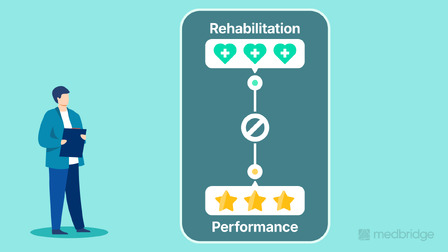
The final abilities an athlete needs before returning to sport—sprinting, cutting, and sustaining effort under fatigue—are often the ones clinicians feel least equipped to program. Left underdeveloped, speed, agility, and metabolic capacity send athletes back to competition undertrained and exposed to reinjury. This course provides a practical framework for building all three, using a healthy-athlete model to show what a training week should contain. It breaks speed into its acceleration and top-end phases and matches sprint distances to real sport demands; it defines agility as both change-of-direction strength—dynamic, concentric explosive, eccentric, reactive, and multidirectional—and the perceptual-cognitive skill of reacting and deciding under game conditions; and it maps the three energy systems, their work-to-rest ratios, and how to train each. It closes with how heart rate signals mechanical breakdown before an athlete consciously feels fatigue. Physical therapists, athletic trainers, and other clinicians who program for athletes will leave able to construct speed, agility, and metabolic progressions that carry an athlete to a complete return to sport.
Learning Outcomes
- Define the foundational building blocks and mechanical principles of speed development utilized in athletic training
- List the core components and building blocks of agility training within sports performance
- Define the energy system pathways and primary building blocks of metabolic conditioning for athletic populations
- Outline a one-week training schedule incorporating speed, agility, and metabolic conditioning progressions for a healthy athlete
Meet your instructors

Phil Plisky
Dr. Phil Plisky is a professor in the University of Evansville’s Doctor of Physical Therapy and PhD in Health Professions Education programs. He is the host of the Medbridge Rehab and Performance Lab podcast and founder of the Coaches Club at

Nate Denning
Dr. Nathan Denning is the founder of Integrated Performance and a partner at Athlete Development Solutions. His mission is to revolutionize human performance and rehabilitation through the integration of physical, mental, and educational support. Nate believes that peak performance—whether for an athlete or a clinician—is the…
Chapters & learning objectives

1. Speed
This chapter defines speed development and its two phases: acceleration, characterized by piston-like leg action, a low forward lean, and horizontal force production; and top end (absolute) speed, characterized by cyclical leg action, upright posture, minimal ground contact, and vertical force. It shows how to train each phase and matches sprint distances to the demands of specific sports, while addressing how to develop speed in athletes whose sport does not involve true sprinting. Because speed is the foundation of power and a required return-to-sport quality, training both phases ensures that an athlete can accelerate and reach top velocity when competition demands it.

2. Agility
This chapter defines agility as two intertwined capacities: the physical components of change of direction—dynamic, concentric explosive, eccentric, reactive, and multidirectional strength—and the skill of agility, meaning the perceptual-cognitive abilities of scanning, anticipation, and decision-making. It clarifies why pre-planned change-of-direction drills are only part of the picture and how reactive drills develop true, game-realistic agility. Building both the physical and perceptual-cognitive sides prepares an athlete to change direction safely and effectively under the unpredictable demands of live play.
3. Metabolic
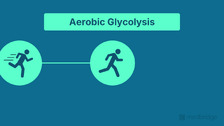
This chapter maps the three metabolic energy systems—phosphocreatine, glycolytic, and aerobic—detailing each system’s capacity, work-to-rest ratios, and training methods, and it quantifies the distance and duration demands of various sports. It also explains how heart rate rises as an early proxy for mechanical breakdown, often well before an athlete perceives fatigue. Matching conditioning to an athlete’s actual sport demands and monitoring fatigue objectively lets clinicians build sport-specific endurance while recognizing the point at which running mechanics have failed and a session should end.
More courses in this series
Simplifying Performance Rehab Part 1: A Case-Based Series
Nate Denning and Phil Plisky

Simplifying Performance Rehab Part 2: Movement, Strength, and Power
Nate Denning and Phil Plisky

Simplifying Performance Rehab Part 3: Speed, Agility, and Metabolic Training
Nate Denning and Phil Plisky
Simplifying Performance Rehab Part 5: UCL Reconstruction
Nate Denning and Phil Plisky

Simplifying Performance Rehab Part 6: Shoulder Instability
Nate Denning and Phil Plisky

Simplifying Performance Rehab Part 8: ACL Reconstruction
Nate Denning and Phil Plisky
Simplifying Performance Rehab Part 9: Ankle Sprain
Nate Denning and Phil Plisky
Frequently asked questions
Everything you need to know about Medbridge courses.
Who creates Medbridge courses?
We work with industry-leaders, top researchers, and consultants to build content roadmaps that are then structured into courses, filmed, and edited by our production team before being launched to our site.
How often does Medbridge release new courses?
New courses are added monthly and are automatically included in your subscription as they launch.
How often does Medbridge update courses?
Medbridge reviews its courses annually for relevance and to assess if content is up to date. Based on these reviews it may be determined that a course is out of date resulting in the course being re-filmed or retired, if the content is no longer needed (e.g. a replacement course already exists, the concepts are no longer best practice, etc.).
How many courses does Medbridge offer?
We have over 3,000 accredited courses and we are continually updating our library with new courses. Check our course library for the most up-to-date count for your discipline.
Are there any additional fees for taking a Medbridge course?
There are no additional fees for taking a Medbridge course, obtaining a course certificate of completion, earning CEUs as a subscriber, or accessing any of the additional tools your subscription may include.
Is there a limit to the number of courses I can take?
There is no limit to the number of courses you can take as a subscriber! As a subscriber to Medbridge, you have unlimited access to over 3,000+ accredited CE courses.
If you are a Premium subscriber, you also have unlimited access to our Patient Engagement Tools such as the Home Exercise Program, Patient Education Library, Orthopedic Exam Tests, and Manual Therapy Techniques. We have over 7,000 exercises and over 650+ videos and handouts of patient education resources with more exercises and patient education added to the library based on subscriber feedback, volume of request and specialities.
What is your refund policy?
You are eligible for a refund provided your request is received within 30 days of your subscription purchase and your account has no activity.