
Simplifying Performance Rehab Part 1: A Case-Based Series
Presented by Phil Plisky and Nate Denning
This course is part of a series designed to be taken sequentially. It is recommended that learners view the series in the following course order:
- Simplifying Performance Rehab Part 1: A Case-Based Series
- Simplifying Performance Rehab Part 2: Movement, Strength, and Power
- Simplifying Performance Rehab Part 3: Speed, Agility, and Metabolic Training
- Simplifying Performance Rehab Part 4: Managing Workload (live webinar on October 21, 2026)
- Simplifying Performance Rehab Part 5: UCL Reconstruction
- Simplifying Performance Rehab Part 6: Shoulder Instability
- Simplifying Performance Rehab Part 7: Sport-Specific Progressions (live webinar on November 18, 2026)
- Simplifying Performance Rehab Part 8: ACL Reconstruction
- Simplifying Performance Rehab Part 9: Ankle Sprain
- Simplifying Performance Rehab Part 10: Putting It All Together (live webinar on December 9, 2026)
Register for all webinars: Cohort Series: Sports Performance Rehabilitation
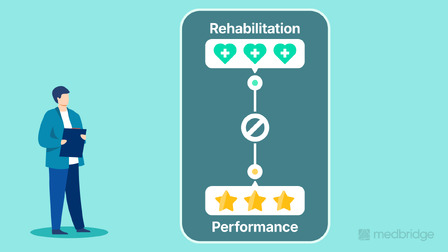
Progressing an injured athlete back to sport is rarely as simple as clearing them at the end of a rehabilitation protocol; the demands of competition require power, speed, agility, and metabolic capacity that traditional rehab often never restores. Many clinicians hesitate to fold performance training into their plans of care, held back by the belief that it requires elite strength-and-conditioning expertise, specialized equipment, or time they don‘t have. This course dismantles those barriers with a case-based framework that treats rehabilitation, reconditioning, and performance as one continuous process rather than separate phases to bridge. Drawing on four recurring athletic cases spanning surgical and nonsurgical upper- and lower-extremity injuries, it shows how to begin with the end in mind, account for tissue healing timelines, monitor training workload, and progress an athlete through the essential domains of performance toward a confident return to sport. Physical therapists, athletic trainers, and other clinicians who manage injured athletes will leave able to identify what is holding their programming back and integrate performance concepts into rehabilitation from day one.
Learning Outcomes
- Identify common barriers to incorporating performance training into rehabilitation programs for injured athletes
- Translate foundational performance training framework components when presented with varied clinical athletic case scenarios
- Define the key principles required to integrate performance training concepts into an athlete‘s rehabilitation program
- Identify the essential domains of athletic performance required for an athlete‘s safe return-to-sport progression
Meet your instructors

Phil Plisky
Dr. Phil Plisky is a professor in the University of Evansville’s Doctor of Physical Therapy and PhD in Health Professions Education programs. He is the host of the Medbridge Rehab and Performance Lab podcast and founder of the Coaches Club at

Nate Denning
Dr. Nathan Denning is the founder of Integrated Performance and a partner at Athlete Development Solutions. His mission is to revolutionize human performance and rehabilitation through the integration of physical, mental, and educational support. Nate believes that peak performance—whether for an athlete or a clinician—is the…
Chapters & learning objectives

1. Performance in Rehab: The Four Cases
This opening chapter reframes the long-standing separation between rehabilitation and performance, confronting the limiting beliefs—that performance work requires elite strength-coach expertise, more time than a caseload allows, or equipment the clinic doesn‘t have—that keep clinicians from integrating the two. It introduces four recurring athletic cases spanning surgical and nonsurgical injuries in the upper and lower extremities that carry through the rest of the series. Establishing this shared framework early gives clinicians concrete patient examples to reason from and a rationale for building performance work into rehabilitation from the first visit.

2. Key Principles
This chapter lays out the core principles for integrating performance concepts into an athlete‘s rehabilitation, beginning with the end in mind by defining sport demands and return-to-sport criteria, respecting tissue-specific healing timelines, using objective biomarkers and testing, and managing progression through acute-to-chronic workload monitoring. Grounding programming in healing biology and measurable load gives clinicians a repeatable way to individualize a plan and then systematically retest, monitor, and adjust it. The result is progression that advances the athlete without spiking workload beyond what healing tissue can tolerate.

3. Domains of Performance
This chapter defines the six domains of athletic performance—movement readiness, strength, power, speed, agility, and metabolic conditioning—and demonstrates how each is programmed across a real in-season training week. Worked examples show what loading, volume, and exercise selection look like within every domain. Knowing these domains gives clinicians a concrete picture of what a healthy, sport-ready athlete‘s training actually looks like so rehabilitation can be progressed toward those same targets rather than stopping short of them.
More courses in this series
Simplifying Performance Rehab Part 1: A Case-Based Series
Nate Denning and Phil Plisky

Simplifying Performance Rehab Part 2: Movement, Strength, and Power
Nate Denning and Phil Plisky

Simplifying Performance Rehab Part 3: Speed, Agility, and Metabolic Training
Nate Denning and Phil Plisky
Simplifying Performance Rehab Part 5: UCL Reconstruction
Nate Denning and Phil Plisky
Simplifying Performance Rehab Part 6: Shoulder Instability
Nate Denning and Phil Plisky

Simplifying Performance Rehab Part 8: ACL Reconstruction
Nate Denning and Phil Plisky
Simplifying Performance Rehab Part 9: Ankle Sprain
Nate Denning and Phil Plisky
Frequently asked questions
Everything you need to know about Medbridge courses.
Who creates Medbridge courses?
We work with industry-leaders, top researchers, and consultants to build content roadmaps that are then structured into courses, filmed, and edited by our production team before being launched to our site.
How often does Medbridge release new courses?
New courses are added monthly and are automatically included in your subscription as they launch.
How often does Medbridge update courses?
Medbridge reviews its courses annually for relevance and to assess if content is up to date. Based on these reviews it may be determined that a course is out of date resulting in the course being re-filmed or retired, if the content is no longer needed (e.g. a replacement course already exists, the concepts are no longer best practice, etc.).
How many courses does Medbridge offer?
We have over 3,000 accredited courses and we are continually updating our library with new courses. Check our course library for the most up-to-date count for your discipline.
Are there any additional fees for taking a Medbridge course?
There are no additional fees for taking a Medbridge course, obtaining a course certificate of completion, earning CEUs as a subscriber, or accessing any of the additional tools your subscription may include.
Is there a limit to the number of courses I can take?
There is no limit to the number of courses you can take as a subscriber! As a subscriber to Medbridge, you have unlimited access to over 3,000+ accredited CE courses.
If you are a Premium subscriber, you also have unlimited access to our Patient Engagement Tools such as the Home Exercise Program, Patient Education Library, Orthopedic Exam Tests, and Manual Therapy Techniques. We have over 7,000 exercises and over 650+ videos and handouts of patient education resources with more exercises and patient education added to the library based on subscriber feedback, volume of request and specialities.
What is your refund policy?
You are eligible for a refund provided your request is received within 30 days of your subscription purchase and your account has no activity.