
Simplifying Performance Rehab Part 8: ACL Reconstruction
Presented by Phil Plisky and Nate Denning
This course is part of a series designed to be taken sequentially. It is recommended that learners view the series in the following course order:
- Simplifying Performance Rehab Part 1: A Case-Based Series
- Simplifying Performance Rehab Part 2: Movement, Strength, and Power
- Simplifying Performance Rehab Part 3: Speed, Agility, and Metabolic Training
- Simplifying Performance Rehab Part 4: Managing Workload (live webinar on October 21, 2026)
- Simplifying Performance Rehab Part 5: UCL Reconstruction
- Simplifying Performance Rehab Part 6: Shoulder Instability
- Simplifying Performance Rehab Part 7: Sport-Specific Progressions (live webinar on November 18, 2026)
- Simplifying Performance Rehab Part 8: ACL Reconstruction
- Simplifying Performance Rehab Part 9: Ankle Sprain
- Simplifying Performance Rehab Part 10: Putting It All Together (live webinar on December 9, 2026)
Register for all webinars: Cohort Series: Sports Performance Rehabilitation
An ACL reconstruction sidelines an athlete for the better part of a year, and clinicians often narrow the plan to knee-focused rehabilitation while whole-athlete performance quietly erodes. This course applies performance programming to a real postsurgical case: a 15-year-old soccer and basketball player recovering from ACL reconstruction who wants to return to sport as soon as possible. It defines the clinical goals and progression criteria for each phase of healing and builds a comprehensive training regimen around them, with particular focus on lower body strength. Learners see how bilateral and unilateral lower body push and pull are progressed from phase 2 to return to sport; how power, speed, agility, and metabolic conditioning are modified by phase; and how evidence-based prevention programs fit into return-to-sport planning. Throughout, it reinforces that isolated joint rehabilitation—early hyperextension, quad strength, blood flow restriction, and open-chain work—continues alongside performance training and that programming begins with the return-to-sport end in mind. That programming begins with the return-to-sport end in mind. Physical therapists, athletic trainers, and other clinicians managing postsurgical athletes will be able to plan phase-specific goals and progress a complete, lower body–focused program from early rehab through sport return.
Learning Outcomes
- Plan phase-specific clinical goals and progression criteria based on the physiological stages of healing following an ACL reconstruction
- Implement core rehabilitation essentials necessary to protect and support adequate tissue healing of the ACL graft
- Apply lower body strength training progressions and coaching strategies across all phases of postsurgical ACL recovery
- Modify power training and rate-of-force-development variables to safely match the athlete’s current healing phase
- Prioritize speed, agility, and metabolic conditioning pathways throughout the ACL rehabilitation process to prepare the athlete for return to sport
Meet your instructors

Phil Plisky
Dr. Phil Plisky is a professor in the University of Evansville’s Doctor of Physical Therapy and PhD in Health Professions Education programs. He is the host of the Medbridge Rehab and Performance Lab podcast and founder of the Coaches Club at

Nate Denning
Dr. Nathan Denning is the founder of Integrated Performance and a partner at Athlete Development Solutions. His mission is to revolutionize human performance and rehabilitation through the integration of physical, mental, and educational support. Nate believes that peak performance—whether for an athlete or a clinician—is the…
Chapters & learning objectives

1. ACL Reconditioning: The Essentials
This chapter introduces the recurring case — a 15-year-old soccer and basketball player recovering from ACL reconstruction — and establishes the rehabilitation essentials that continue throughout: early hyperextension, restoring quad strength, blood flow restriction, and open kinetic chain work, with a return to the gym once the athlete ambulates without an assistive device. It defines the initial-phase goals (reducing pain and inflammation, full hyperextension ROM, quad strength, and hypertrophy) and the progression criteria for each phase, all framed by beginning with the return-to-sport end in mind. Because isolated joint rehab remains essential throughout, anchoring the plan to phase goals keeps performance work aligned with graft healing.

2. Movement and Lower Body Push Progressions
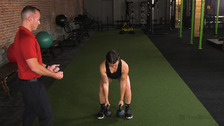
This chapter details how lower body push strength is advanced from phase 2 to return to sport, using bilateral push progressions from the goblet squat through kettlebell rack squats to the barbell front and back squat, and unilateral push progressions built on split squats and lunges, alongside movement screening and early prevention activities. The chapter emphasizes coaching the athlete through each stage. Programming targets strength comprehensively across both unilateral and bilateral patterns, rebuilding lower body capacity for performance and injury prevention while respecting the healing graft.
3. Lower Body Pull Progressions
This chapter modifies power, speed, agility, and metabolic conditioning across the phases of ACL recovery, with phase-specific examples and ground-contact guidelines, and situates evidence-based prevention programs such as the FIFA 11+ and Sportsmetrics within return-to-sport planning. Because these qualities can begin in early rehab, progressing them with respect to healing, developing them by phase, and adding metabolic work to replace the missed practice load returns the athlete not only healed but also sport-ready and at lower reinjury risk.
4. Power, Speed, Agility, and Metabolic Training
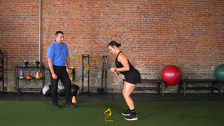
This chapter modifies power, speed, agility, and metabolic conditioning across the phases of ACL recovery, with phase-specific examples and ground-contact guidelines and situates evidence-based prevention programs such as the 11+ and Sportsmetrics within return-to-sport planning. Because these qualities can begin in early rehab, progressing them with respect to healing, developing them by phase, and adding metabolic work to replace the missed practice load returns the athlete not only healed but also sport-ready and at lower reinjury risk.
More courses in this series
Simplifying Performance Rehab Part 1: A Case-Based Series
Nate Denning and Phil Plisky

Simplifying Performance Rehab Part 2: Movement, Strength, and Power
Nate Denning and Phil Plisky

Simplifying Performance Rehab Part 3: Speed, Agility, and Metabolic Training
Nate Denning and Phil Plisky
Simplifying Performance Rehab Part 5: UCL Reconstruction
Nate Denning and Phil Plisky
Simplifying Performance Rehab Part 6: Shoulder Instability
Nate Denning and Phil Plisky
Simplifying Performance Rehab Part 8: ACL Reconstruction
Nate Denning and Phil Plisky
Simplifying Performance Rehab Part 9: Ankle Sprain
Nate Denning and Phil Plisky
Frequently asked questions
Everything you need to know about Medbridge courses.
Who creates Medbridge courses?
We work with industry-leaders, top researchers, and consultants to build content roadmaps that are then structured into courses, filmed, and edited by our production team before being launched to our site.
How often does Medbridge release new courses?
New courses are added monthly and are automatically included in your subscription as they launch.
How often does Medbridge update courses?
Medbridge reviews its courses annually for relevance and to assess if content is up to date. Based on these reviews it may be determined that a course is out of date resulting in the course being re-filmed or retired, if the content is no longer needed (e.g. a replacement course already exists, the concepts are no longer best practice, etc.).
How many courses does Medbridge offer?
We have over 3,000 accredited courses and we are continually updating our library with new courses. Check our course library for the most up-to-date count for your discipline.
Are there any additional fees for taking a Medbridge course?
There are no additional fees for taking a Medbridge course, obtaining a course certificate of completion, earning CEUs as a subscriber, or accessing any of the additional tools your subscription may include.
Is there a limit to the number of courses I can take?
There is no limit to the number of courses you can take as a subscriber! As a subscriber to Medbridge, you have unlimited access to over 3,000+ accredited CE courses.
If you are a Premium subscriber, you also have unlimited access to our Patient Engagement Tools such as the Home Exercise Program, Patient Education Library, Orthopedic Exam Tests, and Manual Therapy Techniques. We have over 7,000 exercises and over 650+ videos and handouts of patient education resources with more exercises and patient education added to the library based on subscriber feedback, volume of request and specialities.
What is your refund policy?
You are eligible for a refund provided your request is received within 30 days of your subscription purchase and your account has no activity.