
A Comprehensive Approach to the Use of Blood Flow Restriction
in ACL Rehab (Recorded Webinar)
Presented by Johnny Owens

Nonfinancial: Johnny Owens has no competing nonfinancial interests or relationships with regard to the content presented in this course.
This course is a recording of a previously hosted live webinar event. Polling and question submission features are not available for this recording. Format and structure may differ from those of standard Medbridge courses.
This webinar will assimilate and provide strategies based on the existing literature covering the use of blood flow restriction (BFR) as part of a rehab program following ACLR. The attendee will learn the state of the literature on BFR use in ACL rehab and how BFR can be used to elicit adaptation in skeletal muscle and other relevant tissues that are of importance in rehabilitation following ACLR. You will be guided through an evidence-based use of BFR in each phase of rehab, beginning at injury and progressing through to return to play. In each phase, you will learn physiologic targets for BFR use and how parameters can be manipulated to elicit an optimal response.
Learning Objectives
- Determine physiologic targets for the use of blood flow restriction (BFR) after ACL injury in the prehab, acute, and subacute phases of rehab
- Apply appropriate BFR parameters based on the phase of rehab
- Determine when to progress BFR exercise modes
- Analyze the current caseload of ACL rehab patients to determine the need to implement or modify BFR use
Meet your instructor
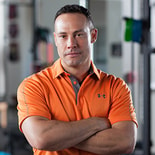
Johnny Owens
Johnny Owens is the CEO and director of clinical research and education for Owens Recovery Science, an Inc. 5000 company. He is the former chief of human performance optimization at the Center for the Intrepid at San Antonio Military Medical Center. He completed his undergraduate coursework in biology at The University of…
Chapters & learning objectives

1. BFR Basics
This section will provide a basic introduction to blood flow restriction (BFR) and how it works. Basic parameters for BFR use will be provided.

2. The State of the Literature on ACL Rehab With BFR
This chapter will review the published literature on BFR exercise use in rehab following ACLR. This section will be used to set the stage for the following sections that will detail a phase-by-phase approach to high-quality BFR implementation in an ACLR rehab plan.

3. You’re on the Clock: Immediate Postinjury Intervention
This chapter will detail the cascade of events that occur within skeletal muscle following an ACL tear. It will then address how BFR may be used to combat those changes.

4. Acute to Subacute Phases: The Meat and Potatoes
The use of BFR in these phases has the most support in the literature and is likely the most important for facilitating a successful rehab in a timely manner. Particular care will be taken to emphasize how to determine the effectiveness of an individual visit.

5. Late-Stage Rehab: How to Move on From BFR
The multifactorial nature of a successful ACL rehab warrants the progression away from light loads and intensities to high-load resistance exercise and plyometric-type tasks. Whether or not BFR has a role in the later phases of rehab will be addressed.

6. Question and Answer Session
In this chapter, questions that were submitted during the live webinar event are answered by Johnny Owens.
More courses in this series

Leveraging Measurement to Inform Athlete Readiness in ACL Rehab (Recorded Webinar)
Robert J. Butler

ACL Hot Topics: Knee Extension ROM and Open-Chain Strengthening (Recorded Webinar)
Kyle Matsel and Phil Plisky

ACL Rehabilitation: Motor Learning Strategies for Adaptive Neuroplasticity (Recorded Webinar)
Dustin Grooms

How to Test and Train Psychological Readiness to Return to Sport (Recorded Webinar)
Clare Ardern

A Comprehensive Approach to the Use of Blood Flow Restriction in ACL Rehab (Recorded Webinar)
Johnny Owens
Frequently asked questions
Everything you need to know about Medbridge courses.
Who creates Medbridge courses?
We work with industry-leaders, top researchers, and consultants to build content roadmaps that are then structured into courses, filmed, and edited by our production team before being launched to our site.
How often does Medbridge release new courses?
New courses are added monthly and are automatically included in your subscription as they launch.
How often does Medbridge update courses?
Medbridge reviews its courses annually for relevance and to assess if content is up to date. Based on these reviews it may be determined that a course is out of date resulting in the course being re-filmed or retired, if the content is no longer needed (e.g. a replacement course already exists, the concepts are no longer best practice, etc.).
How many courses does Medbridge offer?
We have over 3,000 accredited courses and we are continually updating our library with new courses. Check our course library for the most up-to-date count for your discipline.
Are there any additional fees for taking a Medbridge course?
There are no additional fees for taking a Medbridge course, obtaining a course certificate of completion, earning CEUs as a subscriber, or accessing any of the additional tools your subscription may include.
Is there a limit to the number of courses I can take?
There is no limit to the number of courses you can take as a subscriber! As a subscriber to Medbridge, you have unlimited access to over 3,000+ accredited CE courses.
If you are a Premium subscriber, you also have unlimited access to our Patient Engagement Tools such as the Home Exercise Program, Patient Education Library, Orthopedic Exam Tests, and Manual Therapy Techniques. We have over 7,000 exercises and over 650+ videos and handouts of patient education resources with more exercises and patient education added to the library based on subscriber feedback, volume of request and specialities.
What is your refund policy?
You are eligible for a refund provided your request is received within 30 days of your subscription purchase and your account has no activity.